How a $810 Million Pocket Rescission Skirted Congress Before Year-End
The White House's $810 million rescission just before fiscal year-end bypassed Congress's review, prompting a GAO finding that the tactic violates the Impoundment Control Act.
The White House announced on September 25, 2026—just five days before the fiscal year ended—that it was canceling $810 million in congressionally appropriated funds. The timing was deliberate. By submitting the rescission request so close to the fiscal year’s end, the administration ensured Congress would have no meaningful opportunity to block the action before the funds expired on September 30. This tactic, known as a “pocket rescission,” has drawn opposition from both Republican and Democratic lawmakers and a definitive conclusion from the Government Accountability Office: it is unlawful.
The dispute exposes a long-standing tension in how the executive and legislative branches interpret federal spending law. The Impoundment Control Act, passed in 1974 after Watergate, was meant to prevent presidents from unilaterally blocking congressionally approved spending. Yet the administration’s use of the pocket rescission—and its legal defense of it—suggests that framework may not work as Congress intended when the executive acts at the fiscal year’s edge.
What a Pocket Rescission Is
A rescission is a straightforward concept: a request from the president asking Congress to formally cancel budget authority before it is spent. The Impoundment Control Act permits this, but only with conditions. Under the law, once a president proposes a rescission, the administration can withhold the funds for 45 days while Congress decides whether to approve the cancellation. If Congress does not affirmatively vote to rescind the funds within that window, the budget authority must be made available to agencies for obligation.
A pocket rescission circumvents this mechanism by timing a rescission request for late in the fiscal year—so close to the end that the 45-day clock cannot complete before the funds expire. On September 25, with just five days left in the fiscal year, the White House submitted its $810 million rescission request. The House was out of session and not scheduled to return until after the November midterm elections. The funds expired before lawmakers had any realistic chance to review or oppose the cancellation.
The 45-Day Rule
The Impoundment Control Act requires that if a president proposes a rescission, funds must be withheld for 45 days while Congress decides whether to approve the cancellation. If Congress does not affirmatively vote to rescind the funds within that window, the budget authority must be made available for agencies to obligate.
The GAO’s Legal Position
The Government Accountability Office issued a definitive statement on the legality of pocket rescissions. According to the GAO, applying the Impoundment Control Act to permit pocket rescissions would “cede Congress’s power of the purse by allowing a president to, in effect, change the law by shortening the period of availability for fixed-period funds.” The office pointed to the statute’s text and constitutional separation-of-powers principles. The fundamental problem, from the GAO’s perspective, is that a pocket rescission allows the executive to block spending without congressional approval—precisely the power the Impoundment Control Act was designed to prevent.
The constitutional issue runs deeper. Congress holds the authority to appropriate funds; the president’s role is to spend them according to law. A pocket rescission inverts this relationship by allowing the executive to effectively unappropriate money by running out the clock on its availability. The GAO framed this as the executive attempting to “change the law” without going through Congress, a challenge to separation of powers.
The administration has not conceded this point. The Office of Management and Budget argues the statute allows the pocket rescission tactic, though no court has ruled on the dispute. The disagreement between OMB and GAO persists because the legal question remains unsettled—no appellate decision has forced a resolution.
Programs and Funding at Risk
The $810 million rescission targeted a mix of domestic programs, with the largest cuts concentrated in refugee services and immigrant support. The Department of Health and Human Services Office of Refugee Resettlement faced the largest reduction: $567 million for refugee resettlement and services for unaccompanied minors. The Department of Education lost $25 million in migrant student education programs. HUD had $56 million in housing counseling services rescinded, while $70 million was cut from programs that provide grants and fellowships for foreign students and faculty to study or teach in the U.S. Health research funding accounted for an additional $28 million, and the Department of Homeland Security had funding cut for nonprofits that provide mental health and social services to migrants, with smaller amounts removed from other agencies including a $15 million cut to a DOJ office addressing racial tensions and a $10 million reduction to the Minority Business Development Agency.
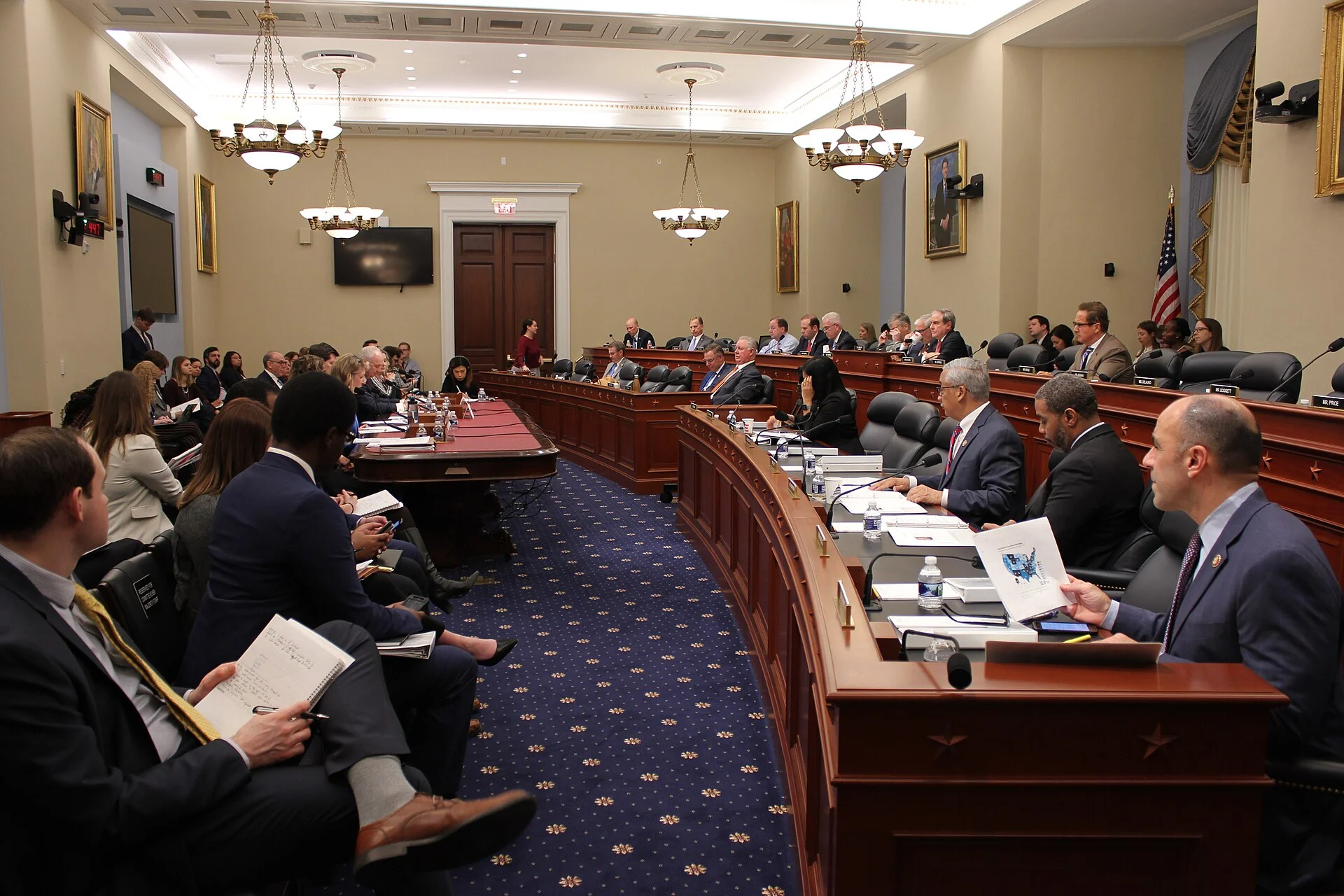
The timing and targets prompted sharp reactions from Congress. Senator Susan Collins of Maine, the Republican Chair of the Senate Appropriations Committee, said the budget office “intentionally withheld these funds for months to execute this unlawful cancellation.” Representative Rosa DeLauro of Connecticut, the ranking Democrat on House Appropriations, contended that “not only is freezing the money in this proposal illegal, but the administration has also clearly been unlawfully impounding funds all year.” The criticism crossed party lines, suggesting that lawmakers from both sides viewed the tactic as a violation of their institutional power.
A pocket rescission inverts the relationship between executive and legislative branches by allowing the executive to effectively unappropriate money by running out the clock on its availability.
The 1974 Precedent and Modern Practice
The Impoundment Control Act emerged from a specific historical moment. President Richard Nixon had refused to spend funds Congress appropriated, using the impoundment power aggressively. Congress responded by passing the ICA to reclaim its power of the purse. The law was meant to be definitive: a president could propose cancellations, but Congress retained final authority.
The mechanism was slow but clear. The pocket rescission strategy tests whether the law’s 45-day window can be defeated by procedural timing. If the fiscal year ends before those 45 days elapse, does the law’s protection evaporate? The GAO says no—the statute does not authorize shortening the appropriation period.
What the Dispute Signals
The pocket rescission controversy reflects a broader question about executive authority in an era of narrow congressional majorities and frequent gridlock. When Congress reaches bipartisan spending agreements and passes appropriations bills, those agreements reflect compromise. A president’s ability to unilaterally cancel portions of that agreement after the fact would significantly alter the dynamics of budget negotiations. Future Congresses might become more reluctant to trust spending bills if funds could be rescinded without their consent.
Congressman Brendan Boyle of Pennsylvania, ranking member of the House Budget Committee, introduced the Congressional Power of the Purse Act to strengthen Congress’s authority against such maneuvers, arguing that “presidents cannot use back-door schemes like so-called ‘pocket rescissions’ to defy the Constitution and block funding Congress already approved.” His statement reflects the core concern: that the pocket rescission tactic, if permitted, would shift power over federal spending away from the legislature toward the executive.
The matter may ultimately reach court. No lawsuit has yet been filed, and it remains unclear whether Congress has legal standing to sue or whether courts would intervene in a dispute between branches over budget authority. Until then, the GAO’s position stands as the most authoritative non-judicial interpretation of the law—but the administration’s willingness to proceed despite that position suggests the question is far from settled.