How a DOJ Brief for OpenAI Reframes the Copyright Fight With Publishers
Federal government intervention in the New York Times AI copyright lawsuit signals how copyright disputes will be resolved, with implications for every publisher, author and tech company involved.
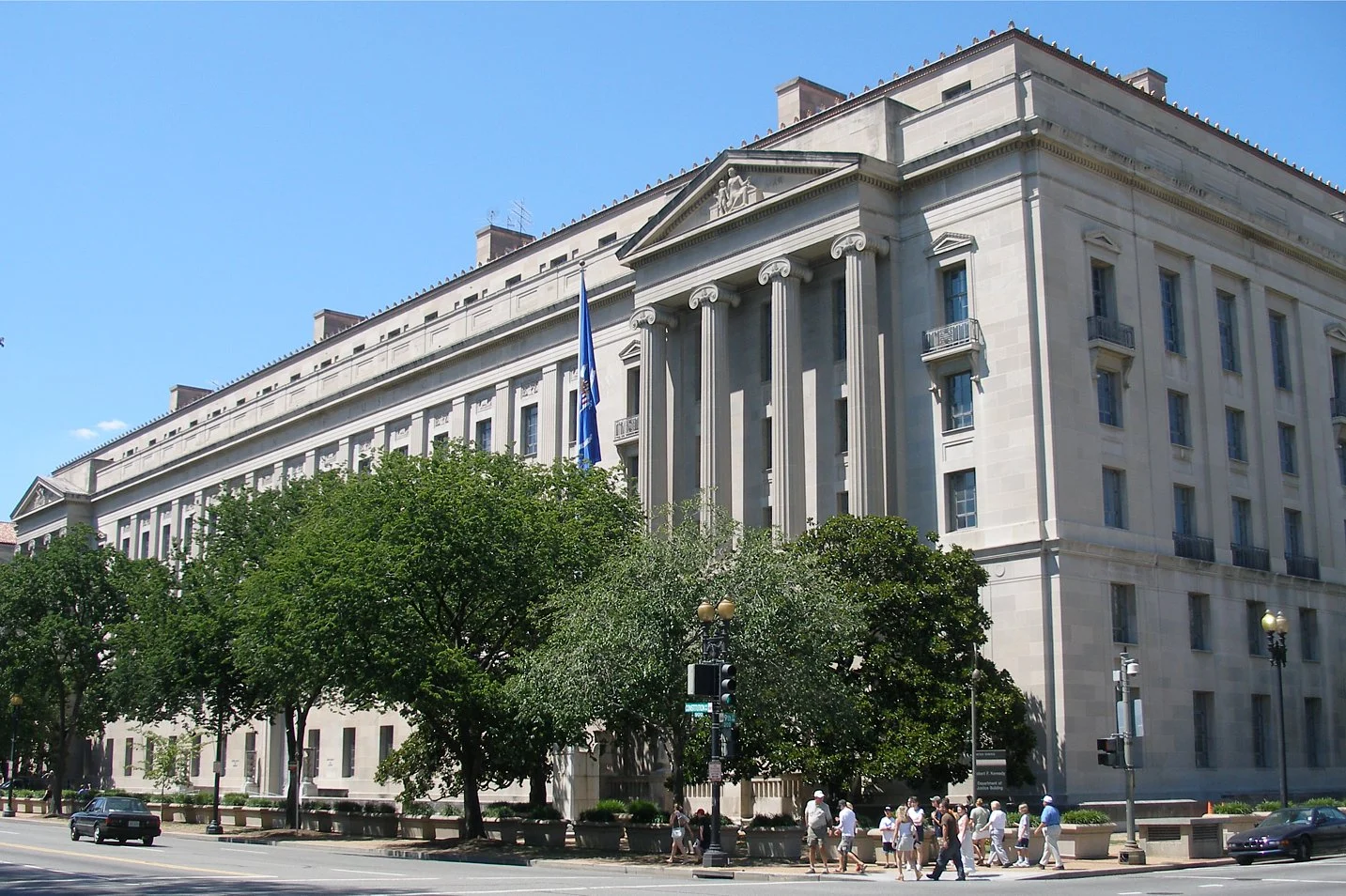
On September 1, 2026, the U.S. Department of Justice filed a 19-page brief in federal court in Manhattan, taking the side of OpenAI and Microsoft against The New York Times in a copyright infringement case; the filing became public the next day. The move marks the first time the federal government has formally intervened in any of the sprawling copyright disputes surrounding artificial intelligence training, signaling a shift in how these disputes will be resolved.
The brief reframes the copyright fight as a matter of national security and economic competitiveness rather than solely as an intellectual property question. The government’s arguments—that training language models on copyrighted material constitutes fair use, and that restricting such training would harm American prosperity—change the terrain for other publishers and authors suing over similar conduct. The DOJ statement will likely influence how courts address pending cases involving Meta, Anthropic, and individual authors, potentially determining which legal theories survive.
The Lawsuit and Its Stakes
The New York Times filed suit on December 27, 2023, alleging that OpenAI and Microsoft ingested millions of its articles without permission to build ChatGPT and Copilot. The Times claimed that ChatGPT could reproduce portions of its copyrighted articles, directly competing with its journalism and threatening newsroom economics. Judge Sidney H. Stein of the Southern District of New York denied most of the defendants’ motions to dismiss in March 2025, allowing central copyright infringement claims to proceed to discovery.
The case consolidated separate lawsuits from the New York Daily News and Center for Investigative Reporting, as well as a class action from the Authors Guild on behalf of fiction writers and their publishers. On September 17, 2026, unsealed court filings revealed candid statements from company executives discussing their data sourcing practices. The Times filed for summary judgment in September 2026, seeking to resolve some claims without trial. The scale of potential liability—statutory damages of up to $150,000 per infringed work—means a ruling against the defendants could carry immense financial exposure, as illustrated by Anthropic’s $1.5 billion settlement in a comparable case.
Timeline of Major Litigation
The New York Times sued OpenAI and Microsoft on December 27, 2023. Judge Sidney Stein denied most motions to dismiss on March 26, 2025. In June 2025, a court found training was fair use in Bartz v. Anthropic but ruled storing pirated copies violated copyright law, leading to a $1.5 billion settlement. The U.S. Department of Justice filed its statement of interest on September 1, 2026.
The Justice Department’s Fair Use Argument
The DOJ’s statement of interest takes a narrow but consequential legal position: training a large language model on copyrighted text is transformative use, a key category in fair use doctrine that courts have recognized since the Supreme Court’s 2021 decision in Google v. Oracle. The government argues that copying text into numerical representations to learn patterns of language serves a “new technological function” distinct from the original purpose of informing or entertaining readers. This reasoning echoes the Google decision, in which the Court found that Google’s copying of Java code was transformative because it let programmers put their existing skills to use in a new system.
The brief distinguishes between the copying activity itself and the outputs the model later produces. The DOJ argues that courts should evaluate training and generated outputs as distinct uses, meaning training’s legality shouldn’t depend on what the models subsequently produce in their outputs. This separation is crucial because it prevents an unfavorable ruling on output generation from automatically invalidating the entire training process.
Market Harm and the Licensing Oligopoly Problem
The government rebuts what it calls the “market dilution theory”—adopted by the court in the related Kadrey v. Meta Platforms case, under which a model trained on an author’s entire body of work could compete with and dilute that author’s market. The DOJ calls this theory “deeply flawed,” contending that training itself does not make protected expression publicly available and therefore creates no legally relevant market substitution. According to the government’s reasoning, the Times cannot claim market harm from training alone, only from outputs that actually substitute for the original articles in the marketplace.
The DOJ’s most novel argument concerns the chilling effect of licensing requirements. The brief warns that mandating licenses for training data would create barriers favoring only the largest technology companies, potentially concentrating the market and excluding smaller competitors. If AI companies must pay licensing fees to use training data, the reasoning goes, only established tech giants with deep capital reserves could afford the costs. This argument inverts the traditional publishers’ complaint that a handful of tech companies already dominate AI development, instead suggesting that licensing rules would entrench that dominance by making entry prohibitively expensive for competitors.
National Security and Executive Policy
The government frames restrictions on AI training data as a national security risk, arguing that rules making it “significantly more difficult to develop a robust AI industry in the United States” threaten national security and give competitive advantage to foreign adversaries. The brief cites executive orders issued in January 2025 and June 2026, along with a National Policy Framework for Artificial Intelligence released in March 2026, all positioning AI development as a strategic priority. This framing elevates the copyright dispute beyond intellectual property law into national defense strategy.
The national security angle distinguishes the DOJ’s intervention from ordinary copyright disputes. Rather than simply assessing copyright law on its merits, the department inserts geopolitical considerations: if copyright restrictions hamper American AI development, foreign competitors could gain advantage. This framing reflects the broader AI policy already articulated in the executive orders and National Policy Framework, making the copyright question inseparable from broader technology competition between the United States and other major powers.
The DOJ warns that mandating licenses for training data would create barriers favoring only the largest technology companies, potentially concentrating the market and excluding smaller competitors.
Competing Lawsuits and Fair Use’s Uncertain Boundaries
The Times case is not the only copyright battle underway. The Authors Guild and 17 fiction writers filed a separate class action against OpenAI in September 2023, consolidating with the Times case. Both plaintiffs and defendants filed summary judgment motions in September 2026, with opposition briefs due in early October and reply briefs due in early November.
A prior case offered conflicting signals about fair use. In Bartz v. Anthropic, a class action filed in August 2024 by authors including Andrea Bartz and Charles Graeber, a federal court in June 2025 found that training on copyrighted books was “transformative—spectacularly so” and constituted fair use. However, the court simultaneously ruled that Anthropic violated copyright law by storing pirated copies of books separately. The case settled for $1.5 billion, with authors receiving approximately $3,000 per work before legal fees. The settlement suggested AI companies might prefer paying settlements to risking trial, where statutory damages could total hundreds of billions of dollars, but it left the law unsettled. The Authors Guild argues that OpenAI “built the foundations of its business on mass piracy,” reproducing and then deleting book content found on the pirate site Library Genesis, and claim books contain organized, structured writing that helps language models mimic human storytelling.
What Government Intervention Means for Publishers and Authors
The DOJ’s statement weakens the legal position of news outlets and authors across pending cases. A statement of interest does not bind a court, but judges may give it persuasive weight as representing the government’s institutional judgment. If the Southern District of New York or appellate courts adopt the DOJ’s reasoning about fair use, plaintiffs in the Meta, Anthropic, and Authors Guild suits would face similar legal obstacles.
The government’s position cuts against the economic model some publishers and authors have pursued. Rather than positioning training data as a licensable asset requiring compensation, some publishers have instead negotiated licensing agreements directly with AI companies, such as the Associated Press with OpenAI in July 2023 and Axel Springer with OpenAI in December 2023. According to The Information, some such publisher-AI licensing agreements have been valued between $1 million and $5 million annually. If the courts adopt the DOJ’s fair use position, publishers’ ability to negotiate future licensing deals of this kind could be undermined.
Photo: Unknown · CC BY-SA 3.0