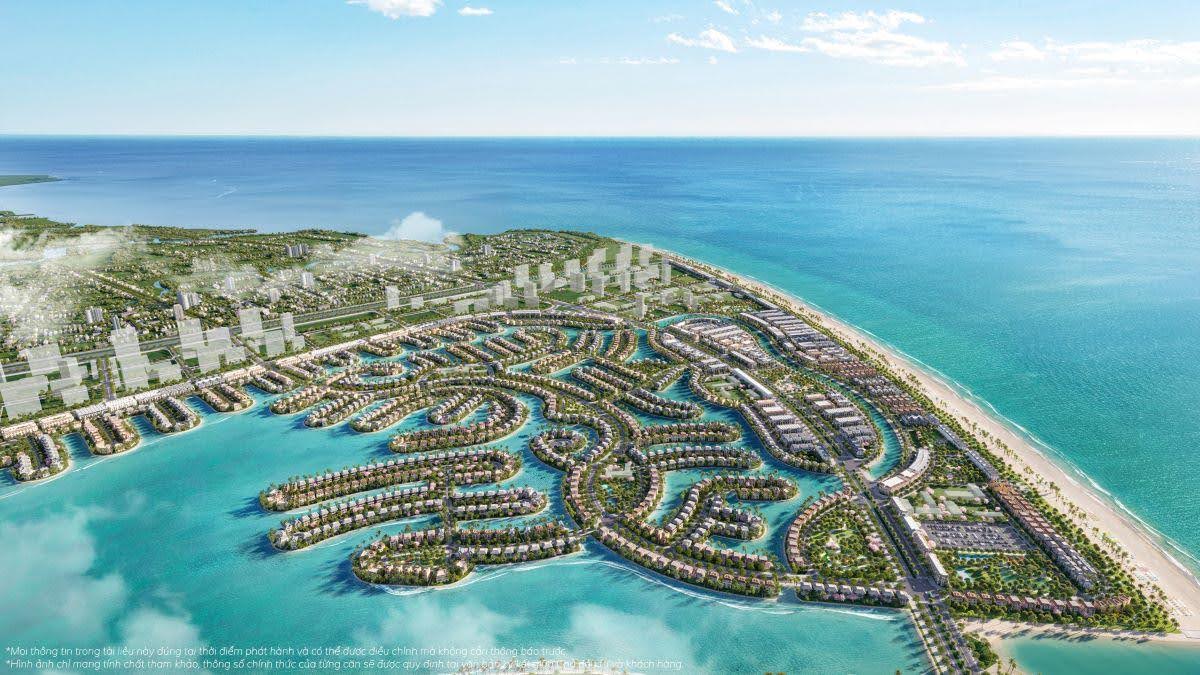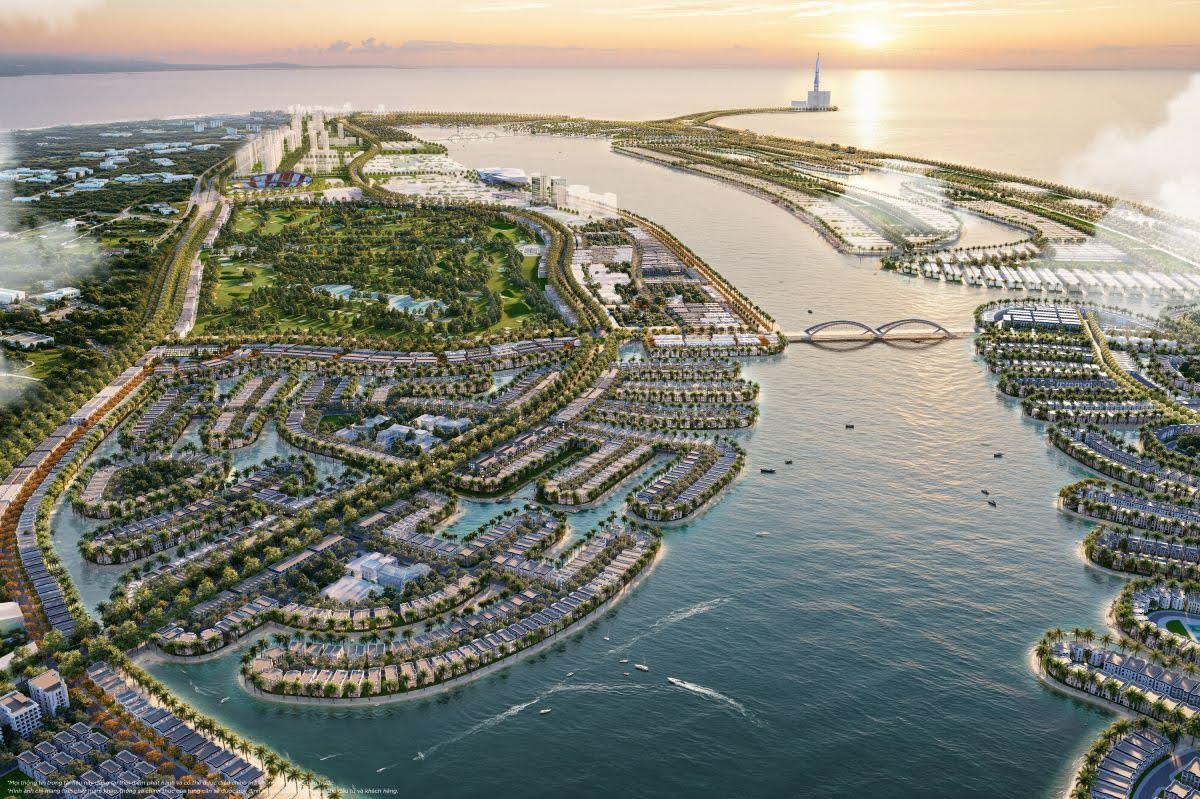
With a philosophy that places human life at the center of all value creation, Vinhomes Green Paradise does more than approach global standards for coastal megacities, it sets new ones. Expanding beyond the conventional ESG framework, the project pioneers an ESG++ model across its 2,870-hectare masterplan, where “adaptation” and “regeneration” are embedded into the city’s operating system. The result is a global flagship, a reference point for how sustainable urbanism can evolve in the 21st century.
Here, value is not generated by extracting from nature, but by restoring and renewing it. The philosophy is simple yet transformative, a city that regenerates its ecosystem simultaneously regenerates its people. Like a forest that grows denser and more resilient after careful cultivation, the urban fabric strengthens by giving back more than it takes.
In that process of ecological renewal lies human renewal. When air is cleaner, movement is healthier, and community spaces are designed for connection rather than congestion, the human spirit responds in kind. Children grow up not surrounded by concrete fatigue but by living landscapes that teach balance and responsibility. Adults inhabit a city that supports longevity rather than drains vitality. The regeneration of nature becomes a quiet, continuous education, shaping generations who do not see sustainability as obligation, but as instinct. Quality of life, in this context, is measured by clarity of mind, strength of body, and cohesion of community.
Jean-Paul de la Fuente, Director of New7Wonders and Chairman of the “7 Wonders of Future Cities,” shared, “Vingroup does not develop projects for five or ten years, but for multiple generations. That is a strategic approach that very few corporations worldwide possess the resources, determination, and execution capacity to pursue.”
It is precisely this long-horizon vision, measured not in fiscal quarters but in generational impact, that enabled Vinhomes Green Paradise to become the first project to meet the criteria of the “7 Wonders of Future Cities” campaign, an initiative seeking the defining urban icons of the 21st century.
In aligning environmental stewardship, social resilience, and economic foresight into a regenerative whole, the project signals a new paradigm, that cities of the future will not simply be smart or green, they will be living systems capable of renewing both the land they occupy and the people who call them home.
VisionFrom the World’s Leading Brands and Capacity for Implementation
Over the past decade, sustainable development has become the main strategy for major global megacities. Alongside Environmental and Governance, Social stands out as a decisive factor in maintaining long-term urban vitality. As UN-Habitat has emphasized, quality of life, reduced inequality and community bonding are core parts of sustainable cities. Similarly, the World Economic Forum (WEF) has noted that future urban growth will depend less on resources or technology and more on social bonding, human resource development and community adaptive capability.
From Singapore and Copenhagen to Vancouver, the cities ranked highest for quality of life share things in common, heavy investment in public health, education, service accessibility and social bonding. According to the WEF, cities nowadays generate over 80% of global GDP, and investment in human capital and social resilience will determine their strength and sustainability in the future.
In Vietnam, Vinhomes Green Paradise Can Gio represents a rare effort to place the social factors at the heart of the strategy right from the planning phase of an ESG++ sea-reclamation megacity of regional stature, with an area of 2,807 hectares. Regarding the capacity to implement this model, Marc Townsend, Senior Advisor at Arcadia Consulting Vietnam, noted, “Vingroup and Vinhomes are organizations that consistently deliver on their commitments. They possess the ability to implement projects on a national scale and build a comprehensive, integrated ecosystem, an achievement very few developers can claim.”
According to De la Fuente, Vingroup’s differentiation does not lie in sheer scale, but in the coherence and intentional design of its ecosystem from inception. “What struck me most is the seamless integration of key pillars, education, healthcare, commerce, entertainment, employment, and even retirement services. Taking Vinhomes Green Paradise as a concrete example, a resident could theoretically live their entire life cycle there.”
He further noted that globally, most new urban developments tend to focus primarily on residential components, complemented by offices and retail as economic necessities. Education and healthcare infrastructure often rely on public systems, leading to fragmentation and imbalance.
“This is precisely where Vingroup and Vinhomes stand apart. They do not merely develop projects, they design a complete ecosystem. Coupled with this is an astonishing speed of execution. I have visited numerous projects worldwide, and very few companies can build, complete, and deliver megacities of such scale, coherence, and efficiency as Vingroup.”
Nurturing the Foundation of Adaptability
At Vinhomes Green Paradise, health becomes a core metric through the restructuring of the healthcare system toward “active immunity.” A special highlight is the five-star Vinmec International Hospital, which maintains a strategic partnership with the Cleveland Clinic, allowing for international consultations and the deployment of the most advanced medical approaches. This is part of a seamless human infrastructure where healthcare is no longer a supplementary service but is personalized directly at home.
Alongside healthcare, a comprehensive multi-level educational foundation featuring Vinschool and Brighton College plays a role in developing human capital. Integrating sustainable living mindsets early contributes to forming a highly aware community, serving as evidence of the effort to place the social factor at the center of planning.
The social factor is further expanded through a “regenerative tourism” model, creating a symbiotic relationship with the UNESCO-recognized Can Gio Mangrove Forest. Pioneering the era of regenerative real estate, the project aims to restore resources through an international hotel system of 7,000 rooms, an 18-hole golf course designed by Tiger Woods that operates with recycled water, and a 122-hectare plastic-free entertainment complex. The project expects to attract 10 to 15 million visitors annually, converting economic value into resources for reinvestment in conservation.
Spiritual life is elevated by the 7-hectare Blue Waves Theatre, the largest in Southeast Asia and a cultural icon utilizing sustainable green architectural solutions. These cultural spaces, along with a network of over 2 million square meters of office space and a 108-story financial tower, allow residents to live and work on-site, minimizing emissions and building social capital through multi-generational engagement at the Young Paradise Hub and the Vin New Horizon retirement model.
When Humans Are the Most Valuable Heritage
Completing the social factor is the Green ID system, which helps track and accumulate ESG points for every green citizen. However, moving beyond billion-dollar infrastructure or management technologies, the true value of Vinhomes Green Paradise lies in creating a genuine human environment. This is a place where health is nurtured, intellect is unleashed and community bonding becomes an intrinsic strength to face all challenges.
Regarding this direction, Marc Townsend emphasized that prioritizing long-term sustainability over short-term profit is a courageous decision by leadership.
“This is not only the first project of its kind in Vietnam but also one that deserves serious discussion at the continental level.”
Ultimately, the greatest legacy left by Vinhomes Green Paradise Can Gio is not just world-class structures, but a sustainable ecosystem where people live happily, safely and proudly at the heart of the regenerated nature. This is the most complete solution to the global challenge of sustainable urbanism.