Vinhomes Green Paradise in Can Gio redefines urban development through its rare ESG++ model. By prioritizing ecological resilience and renewable energy, this landmark project establishes Vietnam as a global leader in sustainable, long-term coastal urbanization.
In Can Gio, Vietnam, Vinhomes Green Paradise demonstrates how a super real estate project can be the answer to the major question of the region and the world, which is redefining the role of the environment in urban development and operation.
New requirements for urban development
Climate change and emission reduction commitments are reshaping how developing nations approach urbanization. As international capital becomes increasingly tied to ESG criteria and Net Zero goals, sustainable operational capacity has become a standard requirement for large-scale urban projects.
Simultaneously, climate risks are driving up operational costs and infrastructure losses, especially in the Asia-Pacific region, where many major cities are situated in vulnerable coastal areas. Therefore, real estate is increasingly evaluated based on its ability to maintain stable operations, adapt in the long term and control environmental risks.
In Vietnam, Can Gio is designated to become the coastal urban hub of Ho Chi Minh City, the country’s largest economic center. This area is adjacent to a UNESCO-recognized mangrove biosphere reserve, covering about 75,000 hectares. The implementation of a massive super-urban project like Vinhomes Green Paradise in such a unique location provides a rare competitive advantage while raising a critical question: what planning and operational choices allow for super-urban development without sacrificing the environment?
When environment leads the way for urban development thinking
The forest-backed, sea-facing geography of Vinhomes Green Paradise provides a distinct starting point. With the Pacific Ocean in front and a massive mangrove ecosystem behind, the project leverages environmental conditions that are highly efficient for climate adaptation. International studies show that mangroves can store four to ten times more carbon than terrestrial forests. This ecological condition shapes a development approach focused on climate resilience and ecosystem protection.
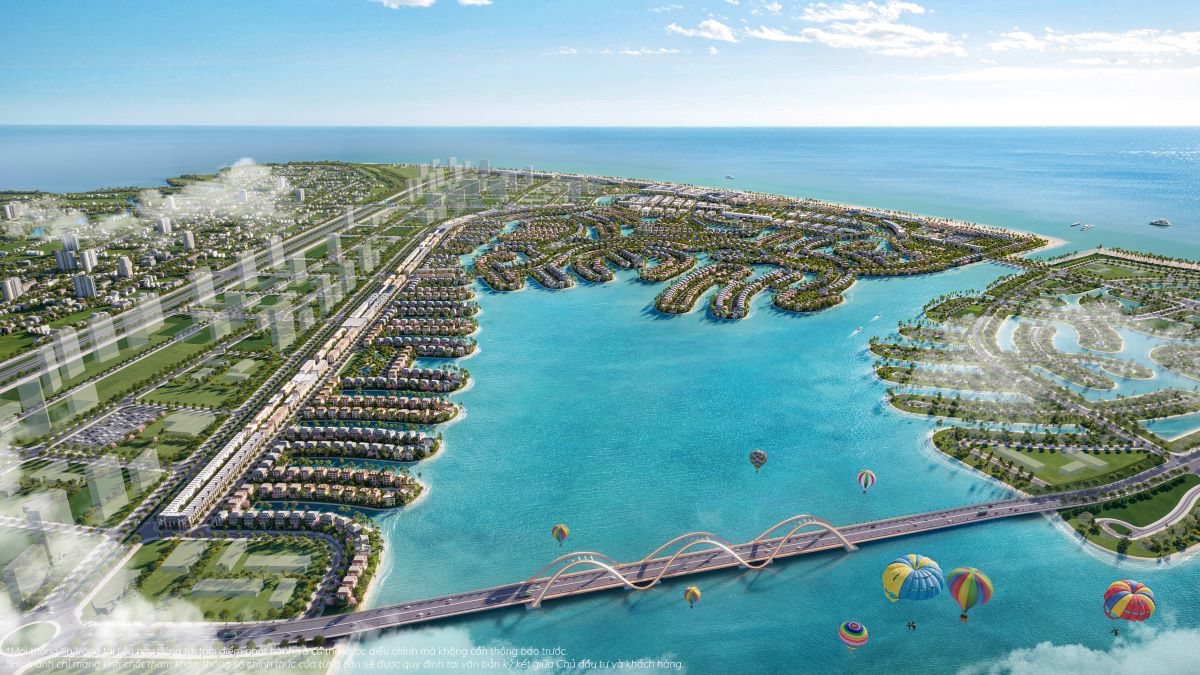
The project planning is organized with a construction density of approximately 16%, with the vast majority of the area dedicated to green spaces and water surfaces. At its center is a natural seawater lagoon with a surface area of 800 hectares, which helps regulate the microclimate, reduce the urban heat island effect and increase drainage capacity during extreme weather conditions.
At the operational level, energy and transportation are organized to minimize emissions. The project utilizes 100% clean and renewable energy, including offshore wind power located 20km from the coast, energy storage battery systems and solar power. This system increases energy autonomy and reduces dependence on fossil fuels. Internal transportation operates using zero-emission vehicles such as electric cars, electric buses and electric canoes, effectively controlling emissions and noise in daily life.
For coastal cities in the Asia-Pacific, flooding risks are a rising challenge. At Vinhomes Green Paradise, infrastructure and urban spaces are developed according to the sustainable design principles of the BREEAM Communities standard. A system of balancing lakes, permeable paving and rainwater reuse models supports sustainable urban drainage, reducing pressure on traditional infrastructure and increasing resilience against extreme weather events.
Water is considered a core element in coastal urban operations. Vinhomes Green Paradise utilizes a domestic water treatment and disinfection system using Ozone technology combined with Biological Activated Carbon (BAC), UV and Chloramine to remove impurities and microorganisms, maintaining stable water quality and supporting a long-term water circulation model.
Besides technical infrastructure, over 1,000 smart alkaline water fountains are arranged in public spaces. Smart sensors help maintain a continuous supply, connecting environmental infrastructure with the daily living experience of residents and visitors.
Urban planning here prioritizes accessibility and inclusivity, featuring a high-frequency public transport network, safe walking spaces and a system of green parks within convenient reach, turning the environment into a fundamental living condition serving a diverse range of residents.
All environmental components at Vinhomes Green Paradise are monitored and coordinated through an ESG Hub that utilizes artificial intelligence. Data is monitored in real-time, supporting stable operations and the ability to adjust flexibly to climate fluctuations.
The convergence of a unique ecological location and a sustainable environmental planning structure makes Vinhomes Green Paradise a rare case in urban development, evaluated by many experts as a “once-in-a-century real estate project.”
Vinhomes Green Paradise in the global ESG real estate picture
Internationally, green real estate is increasingly viewed as a tool for risk management and long-term value protection. The World Green Building Council notes that the asset value of green buildings can increase by up to 7% within five years due to energy efficiency and optimized operating costs.
In Vietnam, this trend is taking a clear shape. According to the Q3 2025 Vietnamese real estate market report by Savills, it recorded a GDP increase of 7.9%, registered FDI of $28.5 billion and a 16% increase in exports. The 2024 overview report of the Vietnamese green building market by IFC and the EDGE certification system shows that Vietnam has 559 buildings with 13.6 million m2 of floor space achieving green certificates, along with over 31,000 apartments and 3,200 individual houses certified. The year 2024 alone saw 163 projects achieve certification, a significant increase over previous years.
In this landscape, transitioning from a suburban green zone, Vinhomes Green Paradise is oriented toward the ESG++ model, expanding the traditional ESG framework to include regeneration and resilience factors. With a scale of nearly 2,870 hectares, the project creates the space to implement ESG at a systemic level amidst the region’s accelerating urbanization.
As green real estate shifts from being an option to an essential demand for long-term growth, projects like Vinhomes Green Paradise demonstrate how Vietnam is step-by-step emerging as a “new reference point” in sustainable urban development for the region and the world.