Why Oil’s Volatile Week Is Raising Costs for Businesses Worldwide
Brent crude swung from a four-month high above $109 to near $104 a barrel this week, driven by attacks on Saudi oil infrastructure that are pushing up shipping and fuel costs.
Brent crude oil swung sharply over the past week, touching a four-month high above $109 a barrel before falling back to settle near $104 on Friday. The moves tracked a fast-changing set of events in the Middle East: a drone attack that knocked out Saudi Arabia’s main pipeline bypass around the Strait of Hormuz, a stalled diplomatic push to ease shipping restrictions through the strait, and a new IEA report warning that global oil supply will stay tight into 2027.
For businesses with international supply chains, the volatility is showing up first in transport. Diesel and jet fuel prices have climbed sharply in the United States, and tanker owners are charging near-record rates to move crude from the Gulf to Asia. Those costs are feeding into a US inflation rate that held at 3.4% in August, with gasoline prices doing much of the work.
A Volatile Week for Crude
Brent, the global benchmark for oil produced in the North Sea, traded between $104.18 and $109.97 a barrel over the past week, according to market data. The high point came Friday, Sept. 11, when Brent touched $109.97 a barrel before falling 3.2% on the day, or about $3.45, to settle at $104.18, according to a market report. West Texas Intermediate, the US benchmark, dropped 2.89% the same day to $99.52 a barrel.
By early this week, Brent had climbed back to about $106 a barrel, up roughly 4% over five trading days, Oilprice.com data show.
Friday’s pullback came as reports emerged that Middle Eastern foreign ministers were negotiating a temporary arrangement with Iran to manage shipping through the Strait of Hormuz, a sign of diplomacy even after a week of attacks on oil infrastructure. A related meeting in Oman was later postponed.
The Bypass Route
Saudi Arabia’s East-West pipeline normally carries 4 million to 5 million barrels of oil a day, about 4% to 5% of global supply, from the Abqaiq oilfield to the Red Sea port of Yanbu, giving the kingdom a way to export crude without using the Strait of Hormuz.
Saudi Arabia’s Backup Route Goes Dark
The week’s sharpest supply shock came from Saudi Arabia. Drones launched from Iraq’s Maysan province struck the kingdom’s East-West pipeline on Sept. 10 and 11, hitting sections near Riyadh and Medina and sparking fires, satellite imagery showed. No group claimed responsibility; Saudi officials said the drones originated in Iraq, and Iran-backed armed groups operating there are suspected.
The East-West pipeline runs 1,200 kilometers across the Arabian Peninsula from the Abqaiq oilfield to the Red Sea port of Yanbu. It normally carries 4 million to 5 million barrels of oil a day, about 4% to 5% of global supply, and is Saudi Arabia’s main way of exporting crude without sending it through the Strait of Hormuz. The kingdom shut the pipeline down as a precaution.
Saudi Arabia said it would not retaliate for now, citing a request from Iraq’s prime minister to give Baghdad time to prevent further attacks from its territory. Iraq’s government dismissed the military commander overseeing operations in Maysan province and opened an investigation.
The Strait of Hormuz Still Isn’t Back to Normal
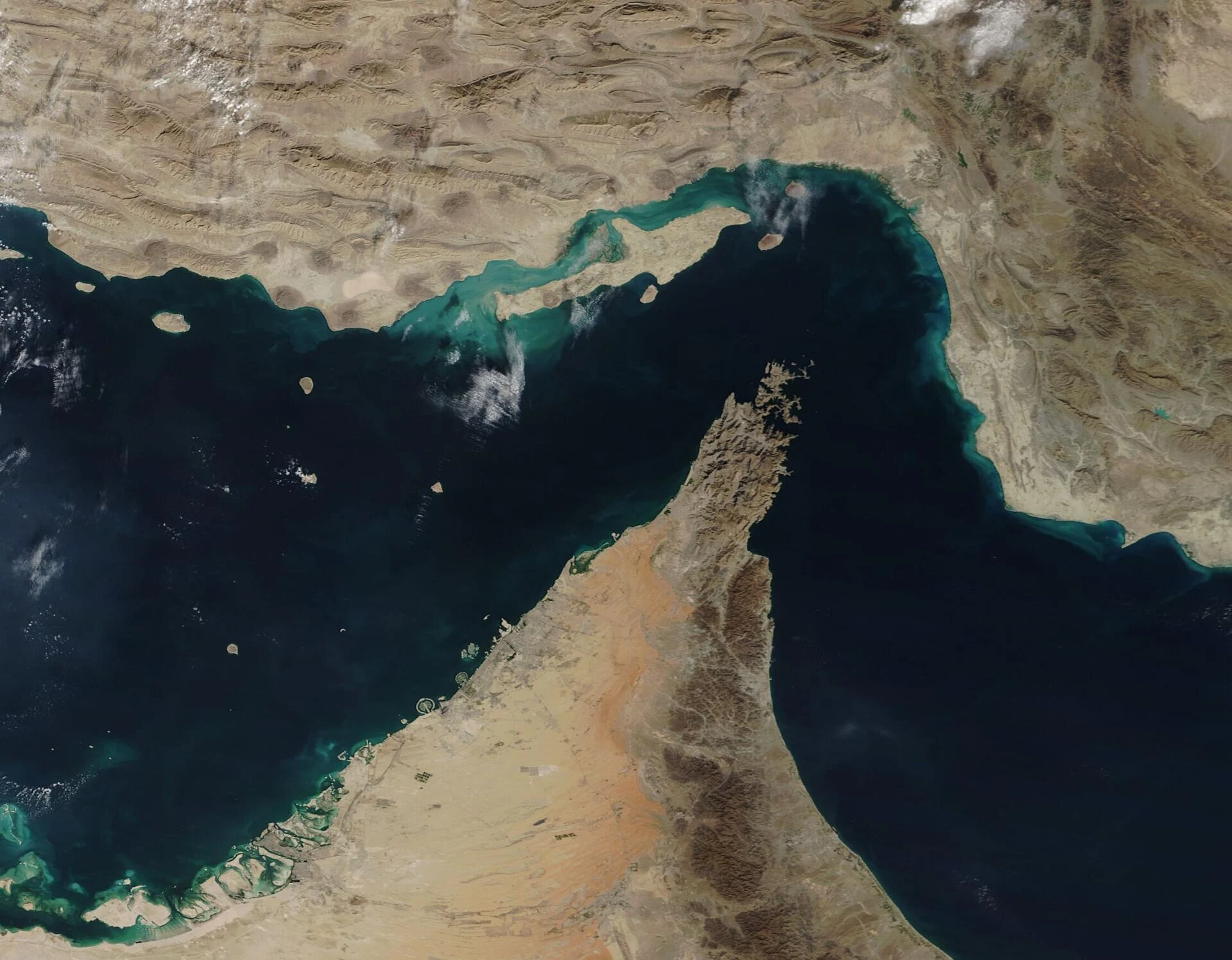
The pipeline attack landed on top of an already-disrupted Strait of Hormuz, the waterway between Iran and the Arabian Peninsula that normally carries about 20% of the world’s oil and liquefied natural gas, roughly 20 million barrels of oil a day on about 100 vessels, according to Al Jazeera.
Iran declared the strait closed on March 2, 2026, days after the United States and Israel launched strikes on Iran on Feb. 28. Shipping through the strait collapsed: data from Kpler show only 279 ships transited between Feb. 28 and April 12, a fraction of normal traffic. Oil prices, which stood at about $65 a barrel before the war, climbed above $100 and at one point reached $126 a barrel, Al Jazeera reported.
Talks meant to ease the bottleneck have struggled. Oman had proposed a joint mechanism for Iran and Gulf states to jointly manage the strait, building on a July plan, and a meeting to discuss it was set for Sept. 14 in Oman. It was postponed after an attack on an Iranian cargo vessel in the strait killed one person, according to Al Jazeera. Iran’s foreign ministry said the postponement was a joint decision with Oman made “at the request of some countries in the region.” The talks have also stalled over whether shipping fees under any new arrangement would be voluntary or compulsory.
The IEA Sees a Tighter Market Into 2027
The International Energy Agency’s September oil market report cut its 2026 global oil supply forecast to 100.7 million barrels a day, 1.3 million barrels below its previous estimate and down 5.7 million barrels from 2025. The agency pushed back its timeline for a full recovery in Gulf oil production to 2027, citing more than 10 million barrels a day of Gulf output still offline because of security concerns. Saudi Arabia told OPEC’s secretariat that its own production fell to 6.238 million barrels a day in August, down 1.9 million barrels from July; the IEA separately put the kingdom’s crude supply at about 6 million barrels a day in August, down 2.3 million barrels. Either figure would be Saudi Arabia’s lowest output in more than three decades. The kingdom’s exports fell by about a third to roughly 3 million barrels a day.
Global oil demand is now projected to fall 2.5 million barrels a day in 2026. The IEA said market buffers are shrinking and that global refining capacity is “stretched to the limit.” North Sea Dated crude, a physical benchmark the agency tracks, averaged $91 a barrel in August before surging to $113.48 on Sept. 9. Global oil inventories fell 95 million barrels in August alone, adding to cumulative draws of 507 million barrels since February.
Saudi Arabia’s main workaround for the Strait of Hormuz went offline this week, when drone strikes forced the kingdom to shut down the pipeline that carries up to 5 million barrels of oil a day to the Red Sea.
Diesel, Jet Fuel and the Cost of Moving Goods
The disruption is hitting diesel and jet fuel harder than gasoline, according to the Bipartisan Policy Center, because Middle Eastern crude yields more of both fuels than crude produced elsewhere, and because the region accounted for roughly 10% of the world’s seaborne diesel exports and 20% of seaborne jet fuel exports before the war. US diesel prices are up 58% and jet fuel is up 106% from a year earlier, while gasoline is up 42%. The US Energy Information Administration has said a full recovery in fuel supply “will take months.”
Shipping costs have also surged. Earnings for supertankers carrying crude from the Middle East to China reached roughly $800,000 a day this month, according to Bloomberg data. A newer Baltic Exchange index tracking the Gulf of Oman-to-East Asia route has climbed 85% since it began, to about $386,000 a day. Very large crude carriers moving oil from the US Gulf Coast to Asia are now costing about $29.5 million a voyage, equivalent to roughly $15 a barrel. Morgan Stanley analysts project two-year tanker leasing rates could rise a further 20% to 30%.
What It Means for Inflation
Those costs are starting to show up in official data. The US consumer price index rose 3.4% in the 12 months through August, unchanged from July, the Bureau of Labor Statistics reported. Gasoline prices rose 3.9% in August alone, accounting for more than a third of the month’s overall increase, and were up 27.4% from a year earlier. Core inflation, which excludes food and energy, eased to 2.4% annually from 2.5% in July, suggesting energy costs are doing most of the work at the headline level so far.
The World Bank, in a forecast issued in April 2026, before this week’s attacks on Saudi infrastructure, projected energy prices would rise 24% for the year and that inflation in developing economies would reach 5.1% in 2026, a full percentage point above its pre-war projection. “The war is hitting the global economy in cumulative waves: first through higher energy prices, then higher food prices, and finally, higher inflation,” World Bank chief economist Indermit Gill said.
Photo: MODIS Land Rapid Response Team, NASA GSFC · Public domain · via Wikimedia Commons