


Key takeaways
- European Sleeper’s Brussels-Cologne-Zurich-Milan night train began running September 9, 2026, after a three-month delay for track works and Swiss certification.
- Fares start at €29.99 for a seat and €129.99 for a Comfort Plus berth with breakfast, on a roughly 17- to 18-hour overnight journey.
- Survey data cited by travel-management firms shows a minority of employers so far require rail over short-haul flights, even as EU emissions-reporting rules and public support for flight bans increase pressure to shift trips to trains.
A new overnight train connecting Brussels, Cologne, Zurich and Milan began running on September 9, 2026, becoming the third route operated by European Sleeper, the Dutch-Belgian cooperative railway that has been rebuilding cross-border night service in Europe since 2021.
The launch lands as companies face growing pressure to account for the carbon cost of employee travel, and as survey data shows a persistent gap between how many business travelers say they would choose a train over a short-haul flight and how many employers actually require it.
The Route and the Schedule
The service departs Brussels Midi on Monday, Thursday and Saturday evenings, travels through Cologne, and crosses into Switzerland before reaching Milan Porta Garibaldi the following morning, according to European Sleeper and the rail-travel guide Seat61. Return trains leave Milan on Wednesday, Friday and Sunday nights. The full journey runs roughly 17 to 18 hours.
Inside Switzerland, the train stops at Aarau, Arth-Goldau, Göschenen, Bellinzona, Lugano and Como San Giovanni, according to Seat61. Zurich is marketed as a destination on European Sleeper’s own site, but the train itself calls at Aarau, with Zurich’s main station reached by a separate regional connection — a detail worth noting for travelers planning to arrive directly in the city center.
The operator originally planned to route the train over the Simplon Pass through Bern and Brig. According to the rail-news site tripbytrip.org, that plan was dropped because Simplon-line track works are scheduled to continue until 2027, and the train instead runs on the older Gotthard route, using the original 1882 tunnel rather than the modern Gotthard Base Tunnel used by daytime Zurich-Milan services. Seat61 notes the older alignment climbs ‘over the top’ of the pass rather than beneath it, adding scenery along the way.
From mid-December 2026, the route is set to add stops at Antwerp, Breda and Eindhoven, extending the service into the Netherlands; sources differ on whether the change takes effect December 13 or 14. From Milan, Seat61 notes that Frecciarossa high-speed trains offer onward same-day connections to Florence, Rome and Naples.
By the Numbers
European Sleeper has raised more than €7 million from over 6,000 crowd investors since its 2021 founding, funding a fleet of refurbished mid-20th-century sleeping cars, according to Wikipedia and the company’s own site.
Cabins and Fares
European Sleeper sells four fare tiers. Budget seating, in open compartments with corridor toilets, starts at €29.99 one way; Seat61 advises it is not well suited to an overnight journey. Classic compartments — four- to six-berth couchettes with a fold-up table, sold from €49.99 — include a reservation, luggage allowance and bed linen.
Comfort Standard compartments, limited to three beds with a made-up bed, start at €99.99. Comfort Plus, the top tier, caps compartments at three beds, adds an in-compartment washbasin, towels, toiletries and breakfast, and starts at €129.99. Fares rise with demand and vary by occupancy: single use of a Comfort Plus compartment, for example, is priced separately from three-person sharing, according to Seat61.
Travelers can also use a European Sleeper Pass, priced from €149 for a month of unlimited travel, or an Interrail pass, paired with a separate seat or berth reservation costing between €52 and €179 depending on class, Seat61 reports.
A Launch Pushed Back Three Months
European Sleeper had planned to start the route on June 18, 2026. It pushed the launch to September 9 because of infrastructure works in Germany and Switzerland during the summer, and because it needed to complete certification to operate trains in Switzerland — a market the cooperative had not previously served, according to tripbytrip.org and Railway-News.
Co-founder Chris Engelsman said the launch marks an important step in the growth of Europe’s night train network, following coordination across the rail infrastructure managers of four countries, according to Il Sole 24 Ore. The Italian leg of the journey, from Milan to the Swiss border, is operated by Arenaways, an Italian private rail operator, the same report noted.
Employer policy lags traveler sentiment: only about a third of employers encourage rail over short-haul flights, and just 6% require staff to book trains on short routes.
Where the Sustainability Case Meets the Numbers
The route arrives amid a broader European shift toward rail. A survey of more than 11,000 people across the US, UK, France, Italy, Germany and Spain, commissioned by Hitachi Rail and conducted by SavantaComres, found a third of respondents expect to travel more by train within 12 months, rising to between 40% and 49% over five years. Only 2% expected to fly more over that period. The same survey found 62% support legislation banning short-haul flights where high-speed rail alternatives exist, rising to 67% in Europe; France has already enacted such a ban on some domestic routes.
Companies also face new reporting obligations. The European Union’s Corporate Sustainability Reporting Directive now requires many companies to disclose indirect, or Scope 3, emissions, which brings flights and ground transport under closer measurement, according to the travel-management firm FCM Travel. The travel-technology company Traxo reports that some corporate travel programs are moving from spend-based carbon estimates to activity-based tracking of trip mode, distance and cabin class, aligning with Greenhouse Gas Protocol accounting standards, and recommends that firms adopt economy-only booking rules for flights under six hours or ‘rail-first’ rules for trips under a set distance threshold.
A survey of 681 business travelers in Europe and Asia-Pacific conducted for the travel-management company BCD Travel found that 31% choose to travel by train specifically because it is a more sustainable option, and that two-thirds would pick a train over a plane when cost and journey time are comparable. Respondents cited convenience, the ability to work en route and easier access to stations as reasons. The same report quoted BCD Travel’s Olivia Ruggles-Brise saying train travel can cut a journey’s emissions by as much as 95% compared with flying.
But the same survey found employer policy lags traveler sentiment: only about a third of employers encourage rail over short-haul flights, 60% have no policy promoting rail at all, and just 6% require staff to book trains on short routes. Separately, FCM Travel reports that close to 60% of travelers say they are concerned about the carbon footprint of work trips, and cites Business Travel News data showing about a fifth of corporate travel buyers have carbon-reduction targets tied specifically to travel.
The Cooperative Behind the Comeback
European Sleeper was founded in April 2021 by Elmer van Buuren and Chris Engelsman, and is structured as a Belgian-Dutch cooperative rather than a conventional corporation. It raised €500,000 from more than 350 investors within 15 minutes of opening its first crowdfunding round in May 2021, according to Wikipedia, and has since raised more than €7 million from over 6,000 investors through additional funding rounds, including a 2025 loan-stock offering and a share sale.
The Brussels-Milan route is the company’s third, after a Brussels-Prague service that began in May 2023 and a Paris-Berlin route launched in March 2026 that took over a corridor previously served by Austria’s ÖBB and added a Hamburg stop that July, according to Euronews. European Sleeper runs its trains with refurbished secondhand sleeping and couchette cars, some dating to the 1950s, according to Wikipedia, and Wikipedia’s company page lists a further route between Brussels and Malmö as proposed for 2028.
European Sleeper’s Paris-Berlin route is one of five notable long-distance European rail launches tracked by Euronews for 2026, alongside a Paris-Munich high-speed service, a Prague-Copenhagen daytime train, the resumption of a Budapest-Belgrade direct service, and a new London-Stirling route.
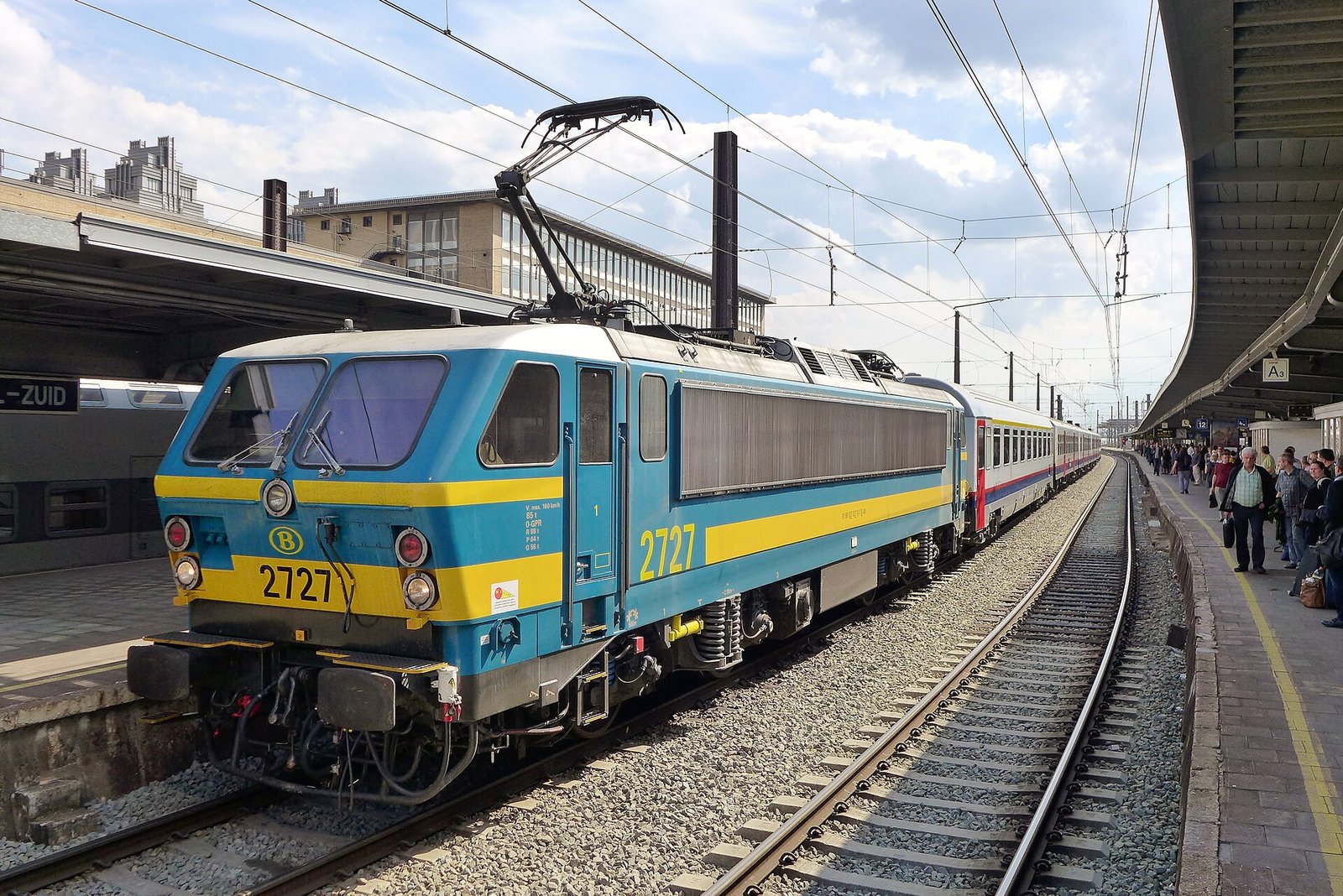
Photo: Bahnfrend · CC BY-SA 4.0 · via Wikimedia Commons
