How the End of Enhanced ACA Subsidies Is Driving Up US Health Costs
Enhanced ACA tax credits lapsed at the end of 2025, and Congress has not restored them, pushing up marketplace premiums, deductibles and enrollment losses in 2026.
Enhanced tax credits that lowered health insurance premiums for Affordable Care Act marketplace enrollees expired on December 31, 2025, after Congress failed to agree on an extension. The lapse is now visible in enrollment and pricing data for 2026: fewer people signed up for marketplace coverage, those who stayed are paying sharply more, and deductibles rose at the steepest rate the marketplace has recorded.
The credits’ expiration sits alongside a separate, longer-running rise in employer-sponsored insurance costs. Together the two trends are adding to the cost pressures that US businesses and individual buyers face when purchasing health coverage in 2026.
What the Credits Did, and Why They Expired
The enhanced premium tax credits were created under the American Rescue Plan in 2021 and extended through 2025 by the Inflation Reduction Act, according to KFF. They increased the size of subsidies for people who already qualified for ACA marketplace assistance and extended eligibility to middle-income households earning above 400% of the federal poverty level, who previously received no help at all.
While the enhanced credits were in effect, marketplace enrollment more than doubled, from about 11 million people to more than 24 million, KFF reports. Congress did not renew the credits before their scheduled expiration at the end of 2025, and they lapsed on schedule.
Enrollment in Numbers
Average effectuated ACA marketplace enrollment is projected to fall to about 17.5 million in 2026, down from 22.3 million in 2025 — a projected decline of 4.8 million, according to KFF.
A Shutdown, Two Failed Senate Votes and a Stalled House Bill
The credits’ fate became tied to a 43-day federal government shutdown. The continuing resolution that reopened the government in November 2025 and funded it through January 30, 2026 secured a promised Senate vote on legislation to extend the enhanced credits, according to a timeline published by the Association of State and Territorial Health Officials (ASTHO).
That vote came on December 11, 2025, when the Senate considered two competing bills. Both received 51 votes in favor and fell short of the 60 needed to advance, CBS News and STAT reported. A Democratic measure, the Lower Health Care Costs Act, would have extended the credits for three years without changes Republicans had sought; it drew support from four Republicans, Lisa Murkowski, Dan Sullivan, Susan Collins and Josh Hawley. A Republican alternative from Senators Mike Crapo and Bill Cassidy, the Health Care Freedom for Patients Act, would have let the credits lapse while redirecting funds to health savings accounts; Rand Paul was the sole Republican to vote against it.
Attention then shifted to the House, where a discharge petition forced a floor vote on a three-year extension, the Health Subsidies Extension Measure (H.R. 1834). The House passed it 230-196 on January 8, 2026, with 17 Republicans joining Democrats; Speaker Mike Johnson opposed the bill, citing fraud and reform concerns, according to Ballotpedia’s reporting. The bill then moved to the Senate, where a bipartisan group was discussing an alternative, the Consumer Affordability and Responsibility Enhancement (CARE) Act, providing a two-year extension paired with income caps and minimum premium payments, per ASTHO. Other proposals introduced in the House include a one-year extension from Representative Jennifer Kiggans with 28 co-sponsors, a two-year extension with a 600%-of-poverty income cap from Representatives Sam Liccardo and Kevin Kiley, a four-year extension capped at 1,000% of poverty from Representative Brad Schneider, and a proposal from Senator Cassidy to replace the credits with pre-funded flexible spending accounts, according to Thomson Reuters. As of the most recent reporting, in January 2026, the Senate had not voted on the House-passed bill or reached a compromise.
What Marketplace Enrollees Are Paying Now
The Centers for Medicare & Medicaid Services’ data show the average amount marketplace enrollees pay out of pocket each month rose from $113 in 2025 to $178 in 2026, a 58% increase, according to a KFF analysis of that data.
KFF’s own analysis, focused on subsidized enrollees specifically, projects a 114% average increase in annual premium payments, from $888 in 2025 to $1,904 in 2026 — about $1,016 more per year. KFF’s examples illustrate how the impact varies: a 45-year-old earning $28,000 a year would see annual payments rise from $325 to $1,562, while a 60-year-old couple earning $85,000 would pay more than $22,600 in additional premiums annually.
Separately, insurers’ 2026 rate filings show gross premiums — what insurers charge before any subsidy — rising an estimated 26% nationally, according to a KFF analysis of those filings. The increase is uneven: about 30% in states using the federal HealthCare.gov marketplace, versus 17% in states that run their own exchanges. KFF and the Health System Tracker attribute roughly four percentage points of that gross increase to insurers’ expectation that healthier enrollees will leave the risk pool once the enhanced credits disappear, leaving a costlier group of remaining policyholders.
The combined effect on enrollment was immediate. Marketplace sign-ups for 2026 coverage fell to 23.1 million, over a million fewer than in 2025, KFF reports. Average effectuated enrollment — people who actually pay their premiums and keep coverage active — is projected to fall to about 17.5 million in 2026, down from 22.3 million in 2025, a decline of 4.8 million. The share of enrollees receiving any premium tax credit fell from 92% to 87%, the first such decline since 2020. Average deductibles jumped 37%, or about $1,000, from $2,759 to $3,786, as enrollees shifted toward cheaper bronze plans — now 40% of selections, up from 30% — and away from silver plans, which fell below half of all selections for the first time, to 43%, according to KFF.
Average deductibles jumped 37%, or about $1,000, from $2,759 to $3,786, the steepest increase the marketplace has recorded.
Employer Health Costs Face Separate Pressure
Enhanced ACA subsidies apply only to marketplace plans, not to the employer-sponsored coverage that roughly 154 million Americans under 65 rely on. But KFF’s 2025 Employer Health Benefits Survey, its 27th annual survey of more than 1,800 employers with at least 10 workers, found employer costs rising on a separate but parallel track. Average annual premiums for family coverage reached $26,993 in 2025, up 6%, or $1,408, from 2024 — the third consecutive year of increases at or above that pace. Workers contributed an average of $6,850 toward family premiums, about a quarter of the total cost. Average deductibles for single coverage rose to $1,886 from $1,773, with workers at small firms facing deductibles of $2,631 versus $1,670 at larger firms.
KFF President and CEO Drew Altman warned of what he called a ‘quiet alarm bell,’ as the survey found insurers were seeking double-digit rate increases across the small-group and individual markets, which KFF said could be ‘foreshadowing big increases in the large-group markets as well.’
Employment law firm Ogletree Deakins notes a separate, structural link between the two markets: under the ACA’s employer mandate, businesses with 50 or more full-time employees must offer affordable, minimum-value coverage to at least 95% of their full-time workforce or risk penalties if those employees instead receive subsidized marketplace coverage. The firm’s analysis says the subsidy expiration is likely to hit hardest at small employers that do not offer health benefits at all and at larger employers with substantial part-time workforces who do not qualify for those employers’ plans — KFF’s survey found only 27% of large firms and 18% of small firms extend benefits to part-time workers. Ogletree’s analysis also suggests that as marketplace coverage becomes less affordable, some workers may seek employment specifically to gain access to employer-sponsored benefits, making recruiting and retention more difficult for employers that don’t offer such benefits.
An Unresolved Legislative Picture
The different figures in circulation — an 18% median rate increase insurers initially proposed, an estimated 26% average gross increase, and a 114% jump in what subsidized enrollees actually pay — measure different things: proposed versus estimated insurer pricing, and gross premiums versus the net amount enrollees owe after any remaining subsidy. Sources are consistent that all three figures rose sharply for 2026, but they are not directly comparable to one another.
Congress has not resolved the underlying dispute. As of the most recent reporting, in January 2026, the House-passed three-year extension remained before the Senate, where the bipartisan CARE Act and several narrower House bills were under discussion without a scheduled vote. A more complete picture of 2026 enrollment, premiums and deductibles is not expected until CMS publishes final effectuated enrollment data later this year, according to KFF.
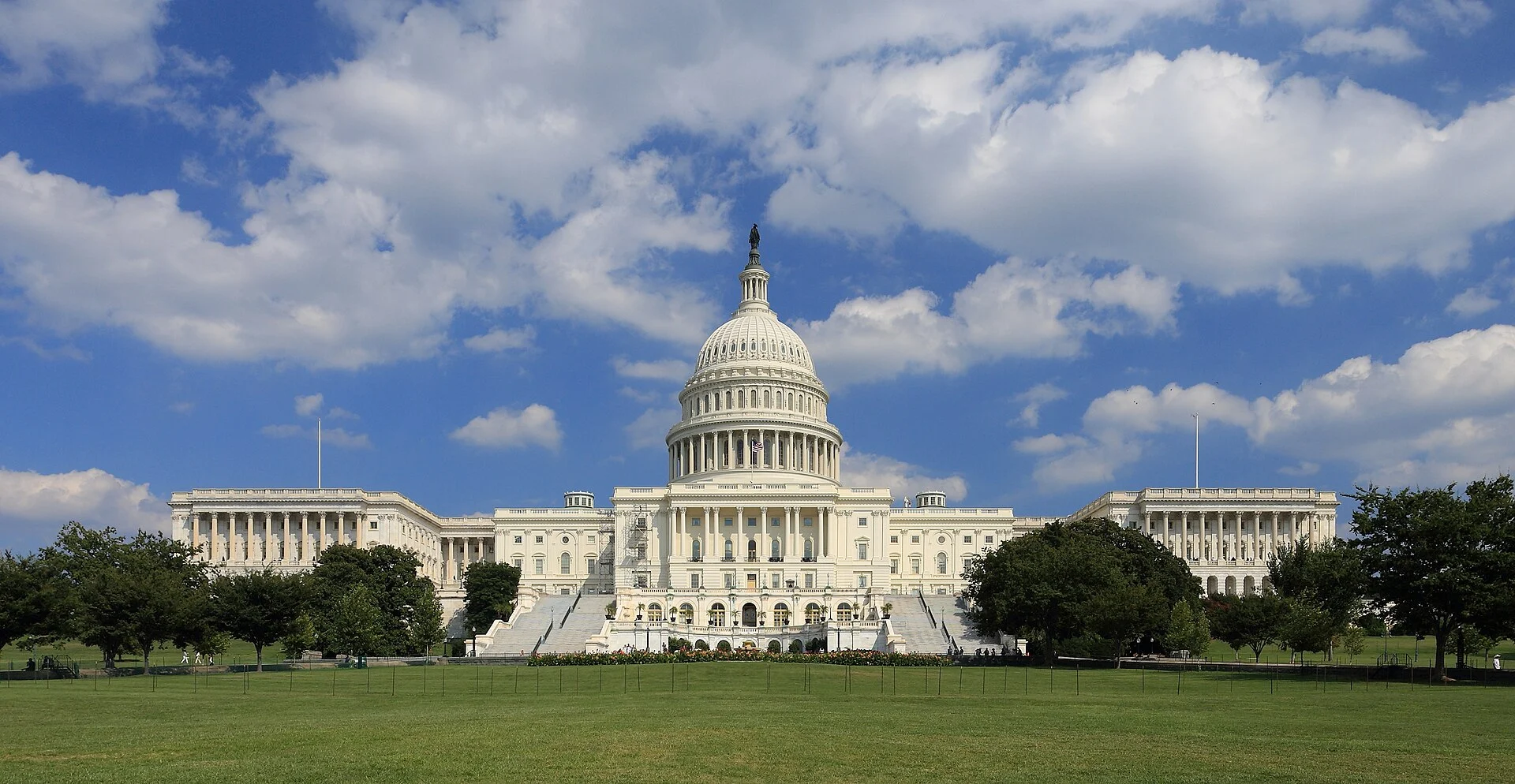
Photo: Martin Falbisoner · CC BY-SA 3.0 · via Wikimedia Commons