How WTO Trade Disputes Get Settled With No Appellate Judges Left
The WTO's Appellate Body has had no judges since 2020, and 34 appeals now sit stuck in limbo. Here is how disputes get resolved instead.
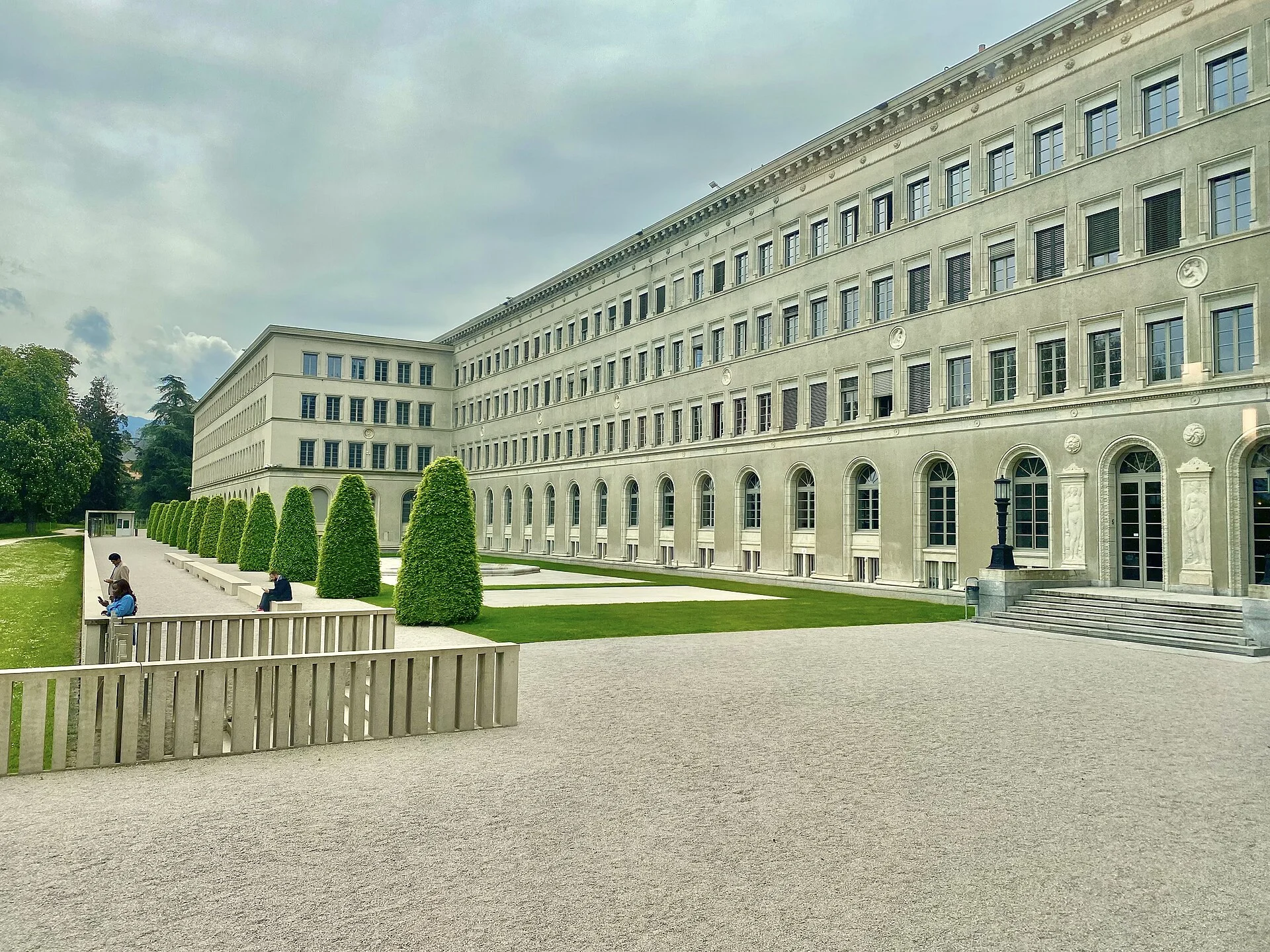
Since 2020, the World Trade Organization’s Appellate Body has had no judges left to hear a single appeal. All seven of its seats have been vacant for nearly six years, the result of a slow blockade across successive US administrations.
Governments that lose a trade case can still file an appeal, sending it to a body that cannot rule. WTO records list 34 such appeals stuck in that state as of November 2025. The gap has pushed governments and companies to find other ways to close out disputes, from a new arbitration arrangement joined by five dozen countries to a unilateral enforcement tool built by the European Union.
How the Appellate Body Ran Out of Judges
The Appellate Body was set up under Article 17 of the WTO’s Dispute Settlement Understanding as a standing court of seven members, appointed for four-year terms and eligible for one reappointment. Each individual appeal is heard by a panel of three of those members.
The United States began blocking reappointments under the Obama administration in 2016, though those early vacancies were eventually filled. The Trump administration then froze all new appointments outright, arguing the body had overstepped its mandate. The Biden administration kept that freeze in place.
By December 2019 the Appellate Body no longer had the three members needed to hear a case. The last sitting member’s term expired on 30 November 2020, and the WTO confirms all seven seats have stood empty since.
Zero Judges, 34 Appeals
As of 21 November 2025, the WTO listed 34 outstanding notices of appeal that cannot be reviewed because the Appellate Body has had no members since the last one’s term expired on 30 November 2020.
What Appealing ‘Into the Void’ Actually Does
Under WTO rules, a losing party has the right to appeal a panel’s ruling. Once it files that notice, the Dispute Settlement Body cannot adopt the panel’s findings until the appeal is resolved.
With no Appellate Body able to hear the case, the appeal simply sits unresolved, and the underlying ruling never takes legal effect. A government or company that won its case at the panel stage gets no binding result and no enforceable remedy. Trade lawyers call the maneuver appealing “into the void.”
The WTO’s own list shows the scale of the backlog: 34 notices of appeal were pending and unable to be reviewed as of 21 November 2025, including a European Union appeal over countervailing duties on Indonesian products and a case brought by Panama, among disputes involving numerous other members.
A Workaround Built on an Old Arbitration Rule
Rather than wait for the United States to lift its block, a group of WTO members built an alternative. The Multi-Party Interim Appeal Arbitration Arrangement, known as the MPIA, uses Article 25 of the Dispute Settlement Understanding, which lets members submit a dispute to arbitration instead of the standard panel-and-appeal process. It took effect in April 2020.
Participation has grown steadily. The WTO said on 28 March 2026 that 61 members now belong to the MPIA, after Barbados, Liechtenstein and Moldova joined that month; the United Kingdom joined in June 2025. Members include the European Union, China, Japan, Canada and Brazil, but not the United States.
When both sides in a dispute belong to the MPIA, an appeal goes to arbitrators instead of the vacant Appellate Body. Two such awards have been issued so far: an EU-Colombia case over frozen fries in December 2022, and an EU-China case over intellectual property enforcement in July 2025. Two more disputes, covering a Brazil-EU poultry dispute and EU-China restrictions linked to Lithuania, could still go to MPIA arbitration if either side appeals.
A government or company that won its case at the panel stage gets no binding result and no enforceable remedy.
Where the Arbitration Fix Doesn’t Reach
The MPIA only works when both sides in a dispute have joined it. The United States has not, so a panel ruling against or by the US, or against any other non-member, can still be appealed into the void with no arbitration fallback available.
The European Union built its own backstop for those cases. Its amended Enforcement Regulation, revised in 2021, lets the European Commission impose unilateral countermeasures when the EU wins a panel ruling but the other side blocks its adoption by appealing into the void. Trade law analysts have pointed to a dispute over Indonesian nickel export restrictions, where the EU estimated the economic harm at roughly €350 million, as a case where that tool could come into play.
Outside the MPIA and the EU’s own regulation, options narrow further. A dispute can still end if the losing side chooses not to appeal, letting the panel report be adopted as normal, or if the parties negotiate a mutually agreed solution. Absent either, a ruling can simply remain unresolved indefinitely.
A Reform Process Still Short of a Deal
WTO members have repeatedly promised to fix the underlying problem. At the 2022 ministerial conference, they committed to restoring “a fully and well-functioning dispute settlement system accessible to all members by 2024.” That deadline passed without a deal, and members reaffirmed the same goal at the 2024 ministerial conference instead.
The General Council appointed Ambassador Usha Chandnee Dwarka-Canabady of Mauritius as facilitator of the reform talks in April 2024, and six co-convenors were named the following month to work through technical issues, starting with how appeals should work and who can access the system.
By the 14th ministerial conference in 2026, members still had not agreed on a way to restore a functioning Appellate Body. Meanwhile, the WTO says that despite the impasse, members continue to resolve disputes: in the two years before March 2026, they filed 22 new cases, adopted five panel reports without appeal, and resolved eight more disputes themselves, including through mutually agreed solutions.
Photo: Jérémy Toma · CC BY-SA 4.0 · via Wikimedia Commons