IMF Stand-By Money Is Paid in Tranches, With Annual Access Capped at 200% of Quota
The IMF releases Stand-By Arrangement money in tranches tied to reviews and policy commitments, with access capped at 200% of quota a year and surcharges set above 300%.
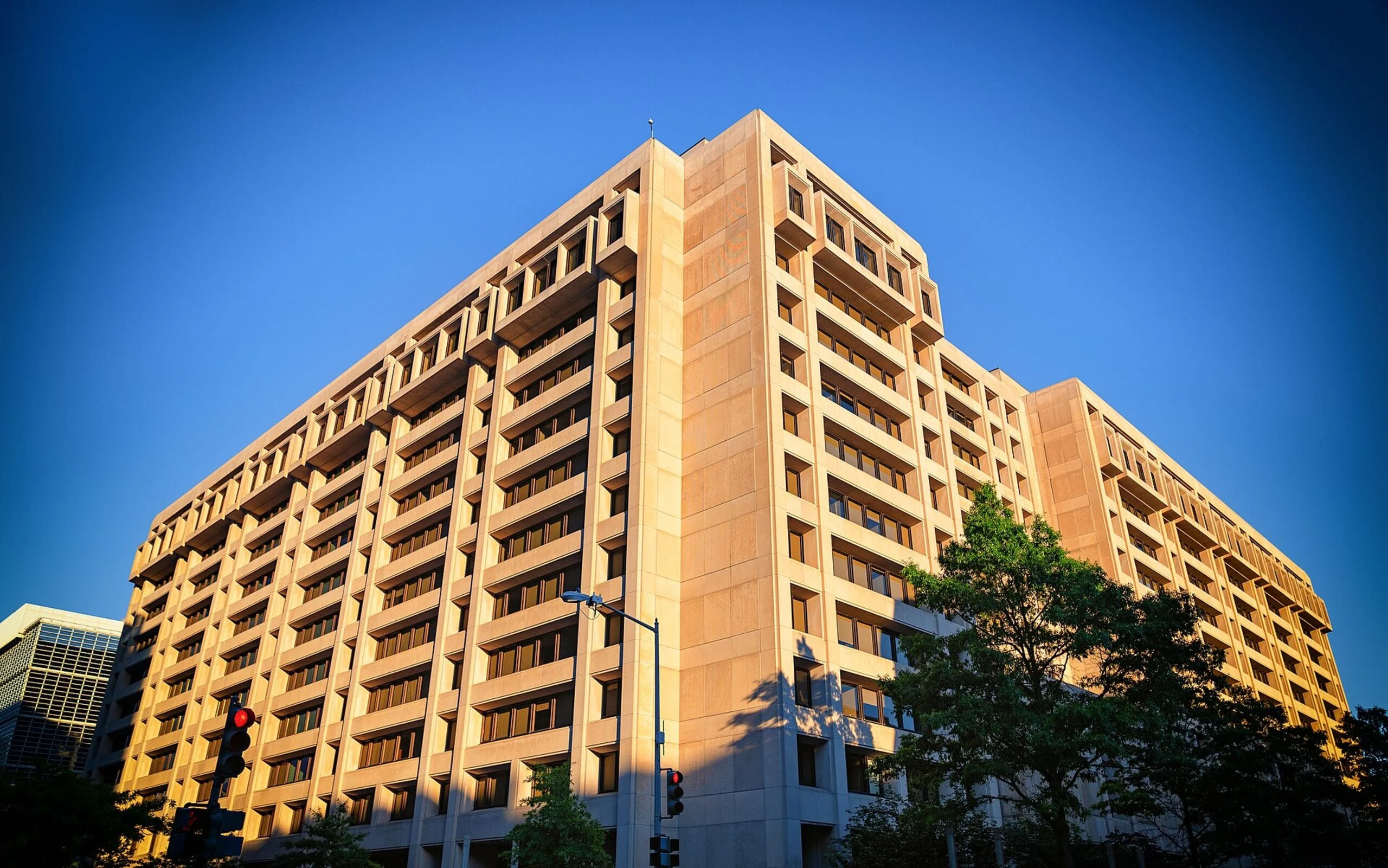
The International Monetary Fund lends to member countries facing balance of payments problems. One of its instruments is the Stand-By Arrangement, or SBA. The IMF says the SBA is open to all members and is used most often by advanced and emerging market economies. A country is approved for a set amount, but the money is paid out in stages rather than in a single transfer.
Each IMF program has two parts: the financing a country can draw and the policy commitments attached to it. The payment schedule, access limits, fees and surcharges together determine what a borrower receives, when it receives it and what it pays back.
Tranches Released After Periodic Reviews
Under an SBA, access is provided in tranches, with periodic reviews of policies and program implementation. The IMF Executive Board regularly assesses program performance.
Most IMF financing is paid in installments linked to policy actions a government has taken.
Typical SBA duration is 12 to 24 months, and no more than 36 months. The IMF describes the length as flexible. The SBA can also be used as a precautionary arrangement, which lets a country keep approved amounts available without drawing them.
Access Limits Under an SBA
An SBA allows access of up to 200% of quota in any 12-month period and up to 600% of quota cumulatively, net of repayments. Each disbursement is repaid in eight equal quarterly installments starting 3¼ years later.
The Conditions Borrowers Agree To
A government chooses and carries out its own policies, which are laid out in a letter of intent and a memorandum of economic and financial policies. The IMF says the conditions aim to restore balance of payments viability and macroeconomic stability and to protect IMF resources so they can be lent again. For low-income countries, they also aim to reduce poverty. Economic policies must address the problems that prompted the request.
Prior actions are steps taken before the IMF approves financing or completes a review. Quantitative performance criteria are measurable conditions tied to variables the authorities control, such as reserves, fiscal balances, monetary aggregates and external borrowing. Indicative targets are numerical benchmarks used more when uncertainty is high, and they may become performance criteria as uncertainty falls.
Structural benchmarks cover reform measures that are harder to quantify but mark implementation.
Disbursements under an SBA depend on observing quantitative performance criteria. If one is missed, the Board may approve a waiver when it judges the program is still likely to succeed. Missed structural benchmarks and indicative targets do not require a waiver and are assessed within overall program performance.
Access Caps and the Repayment Schedule
The annual access limit under an SBA is 200% of quota in any 12-month period. The cumulative limit is 600% of quota over the life of the arrangement, net of repayments.
Exceptional access is decided case by case under the IMF’s Exceptional Access Policy. Rapid access allows accelerated approval under the Emergency Financing Mechanism.
Each disbursement is repaid in eight equal quarterly installments, beginning 3¼ years after the disbursement. The IMF’s SBA summary states that each disbursement falls due within 3¼ to 5 years.
Commitment Fees, Service Charge and the Basic Rate
A commitment fee is charged at the start of each 12-month period on the undisbursed amounts a country can draw. The rate is 15 basis points on commitments up to 200% of quota, 30 basis points on amounts above 200% and up to 600%, and 60 basis points above 600%. The fee is refunded pro rata for amounts drawn, in full if the entire amount is drawn, and not at all if nothing is drawn.
A service charge of 50 basis points applies to each amount drawn. The basic rate of charge combines the SDR interest rate, which has a floor of 5 basis points, with a margin. That margin fell to 60 basis points from 100 on November 1, 2024.
Most IMF financing is paid in installments linked to policy actions a government has taken.
Surcharges Changed on November 1, 2024
The level-based surcharge is 200 basis points on General Resources Account credit outstanding above a threshold. The threshold rose to 300% of quota from 187.5%, effective November 1, 2024.
The time-based surcharge applies to credit above the level-based threshold for more than 36 months, or 51 months under the Extended Fund Facility. The IMF’s charges FAQ says its rate fell to 75 basis points from 100. The SBA summary describes the time-based surcharge as an extra 75 basis points. The commitment fee thresholds also rose, to 200% of quota annually and 600% cumulatively, from 115% and 575%.
The IMF estimates that borrowing costs fall by about SDR 880 million, or US$1.2 billion, a year, based on fiscal year 2026 projections. That is a 36% reduction in the cost of the margin and surcharges for General Resources Account borrowers.
Of 52 members borrowing from the General Resources Account, 19 were subject to surcharges before the reform. From November 1, 2024, the number paying falls to 11. Eight countries drop below the new threshold: Benin, Côte d’Ivoire, Gabon, Georgia, Moldova, Senegal, Sri Lanka and Suriname. For fiscal 2026, staff project the count will fall from 20 to 13. The surcharge policy is reviewed every five years, or sooner if circumstances warrant.
Conditionality Under the 2026 Review
The IMF’s 2026 review of program design and conditionality proposes making programs more realistic, tailored and flexible in responding to shocks. It also proposes a stronger focus on critical reforms and programs likely to produce durable results. The review is presented as a proposal.
Conditions in all IMF programs are monitored through MONA, the IMF’s public database for monitoring Fund arrangements. MONA covers all aspects of program conditionality.
Conditionality has changed over time. In the early 1980s it focused mainly on macroeconomic policy, and its scope grew as the IMF worked more with low-income and transitional countries. The IMF issued Guidelines on Conditionality in 2002, setting high-level principles that still apply. A 2018 review was the first comprehensive stocktaking since the global financial crisis. It recommended better macroeconomic projections, sharper debt sustainability analysis and structural conditions tailored to each country. A 2024 Operational Guidance Note updated staff guidance.